04

Typeface Analysis

ITC Avant Garde Gothic

I chose the ITC Avant Garde Gothic font for analysis. According to MyFonts, this font was originally the logo for Avant Garde magazine, and its Roman typeface design was completed by Herb Lubalin and Tom Carnase in 1970. MyFonts also points out that it is one of ITC's earliest font series. Monotype describes ITC Avant Garde as having glyphs primarily composed of circles and straight lines. This is the font's most distinctive feature. When I observed it, I found its geometric structure to be very rigorous, giving the design a clean and modern look. It is precisely because of this structure that this font possesses a very distinctive personality. It doesn't get lost in the background but immediately creates a strong visual impact.

Another important feature of ITC Avant Garde Gothic is its suitability as a headline font. Monotype points out that its wide glyphs and high x-height make it very suitable for short texts and headlines. MyFonts also points out that current digital fonts, based on headline design, are best suited for font sizes of 14 points and above. A closer look at the glyphs reveals this to be quite reasonable. The glyphs are visually striking, making them easier to appreciate in sufficient space. However, some of their more distinctive details can become weaknesses in longer texts. The MyFonts website specifically points out that the single-layer lowercase 'a', the short loop of the letter 'f', and the short lower extension of the letter 'g' all reduce legibility at certain sizes. In my opinion, this doesn't mean the font is unsuccessful. It simply indicates that its main strength lies in visual impact, rather than clear legibility.

The third characteristic of this font is its alternative glyphs and ligature system. The MyFonts website explains that the initial demo design included 33 alternative characters and symbols, while the Avant Garde font archive highlights the font's rich ligatures. Alternative characters and ligatures create unusual combinations and a more stylized look, making the font appear elegant, sometimes even futuristic. However, this characteristic can also be risky. If the designer uses too many decorative combinations, the final result may be difficult to read. Overall, I think ITC Avant Garde Gothic is a successful typeface because it strikes a balance between rigorous geometry and strong visual appeal. It's not a neutral typeface, which is precisely what makes it memorable.
05

Typographic Composition Analysis

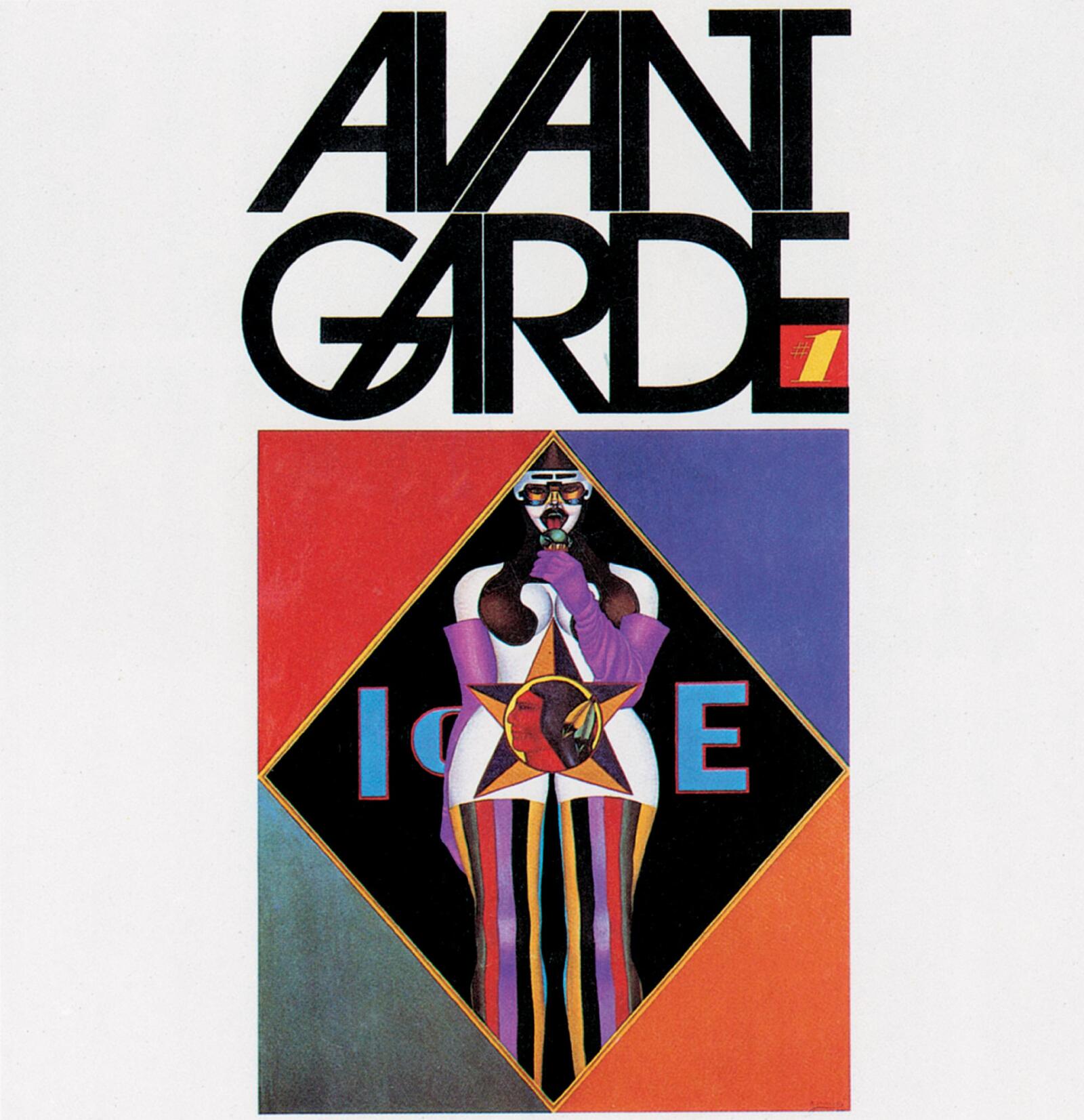
Avant Garde magazine masthead

In my analysis of typography, I chose the masthead and cover typeface of Avant Garde magazine. Archival materials for Avant Garde indicate that this magazine was the third major collaboration between Ralph Ginzburg and Herb Lubalin, noting that Lubalin was the magazine's art director. The materials also mention that the magazine's logo perfectly encapsulates its 1968 philosophy: vibrant and playful. This is a very good point of analysis for me because it shows that the design purpose of this typography was not merely to identify the publication. It had to immediately convey the magazine's tone. This is one of the reasons why the masthead typeface is so striking. The typeface and the magazine's content become part of the content itself in letterform. This is one of the clearest examples of Lubalin's approach to typography as visual communication rather than simple labeling.

The visual power of this typography stems from its compactness, relevance, and control. The Encyclopædia Britannica explains that the logo uses ligatures and alternative characters to form a compact design. This description is apt because the masthead appears almost as a single visual unit rather than a line of text. The letters are closely connected, creating a sense of dynamism. Geometric structures maintain a sense of order, while the compact layout lends it a vibrant feel. In my opinion, it is this balance that makes the masthead so memorable. It is both modern and precise, yet dynamic and individualistic. In a sense, its composition is simple, as it is merely a wordmark, yet it carries a wealth of visual meaning. This is no easy feat. It demonstrates a profound understanding of spacing, letter relationships, and editorial tone.

Avant Garde magazine cover

Cover typography

This composition is also historically significant, as it later became the basis for a typeface. AGI points out that the masthead of Pioneer magazine inspired Lubalin to design the eponymous typeface series, and Pioneer magazine archives indicate that the magazine itself created this typeface, giving the work a dual significance. It is a success in itself, and also a bridge between editorial design and type design. It demonstrates how Lubalin transformed a typographical concept into a brand identity, layout design, and ultimately, a complete alphabet. This combination makes the masthead of Avant-Garde magazine one of the clearest examples of his influence on the field of typography.

06

Sources

  1. Herb Lubalin | American graphic designer | Britannica. (2026). Encyclopedia Britannica. https://www.britannica.com/biography/Herb-Lubalin?utm_source
  2. Herb Lubalin – Alliance Graphique Internationale (AGI) – 512 creative professionals from 46 countries. (2026). Alliance Graphique Internationale (AGI). https://a-g-i.org/user/herblubalin/?utm_source
  3. ITC Avant Garde Gothic® Font Field Guide | Myfonts. (2026). Myfonts.com. https://www.myfonts.com/a/font/content/font-field-guide/itc-avant-garde-gothic//?srsltid=AfmBOoo3KgMVml3SJx5jHM8ZF474MEGsyutFS3hTn3u_vxXv6o5JT-iE&utm_source
  4. Meggs, P. B. (2005, July 8). Graphic design | Art, Typography, & Layout Techniques. Encyclopedia Britannica. https://www.britannica.com/art/graphic-design/Graphic-design-in-the-20th-century?utm_source
  5. The Herb Lubalin Study Center of Design and Typography. (2026). Cooperedu. https://cooper.edu/art/herb-lubalin-study-center-design-and-typography?utm